Broken and Banking: How Adult Creators Turned Their Worst Moments Into Their Biggest Paychecks
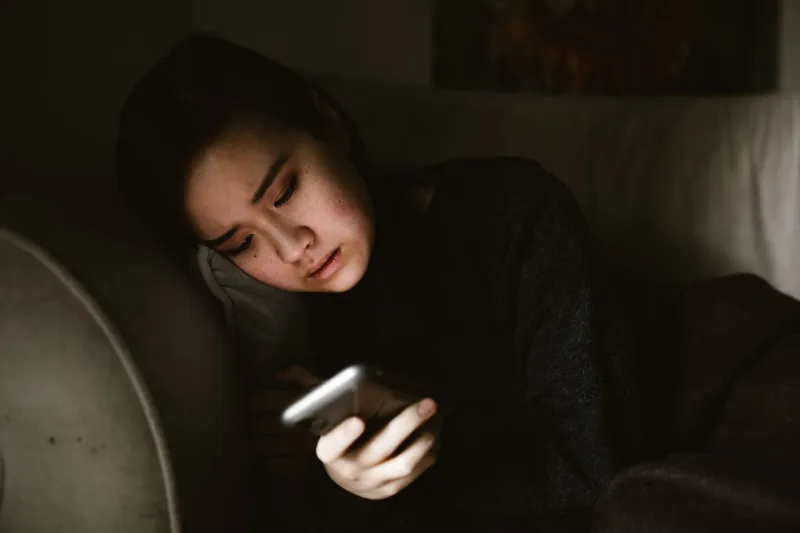
There's a creator — we'll call her Dani, because she asked us not to use her real name — who posted a tearful, unedited video in January about not being able to make rent. No ring light. No flattering angle. Just her, a crappy apartment, and the kind of honesty most people reserve for their therapist. Within 48 hours, she'd received more in tips than she'd earned the entire previous month combined.
She didn't plan it as a marketing move. She was just exhausted and scared. But what happened next reshaped how she thinks about her entire business.
"I'd spent two years trying to look like I had my life together," she told us. "One honest video broke all my records. That messed with my head for a while."
Dani isn't an outlier. Across major subscription platforms — from OnlyFans to Fansly to a dozen smaller competitors — the data is telling a consistent story: audiences aren't just tolerating vulnerability from adult creators. They're paying a premium for it.
The Numbers Don't Lie (Even When Creators Wish They Did)
Platform-level analytics are notoriously hard to get your hands on, but creator-shared data paints a vivid picture. Multiple creators who spoke with FilthServer described the same pattern: content that reveals personal struggle — financial stress, mental health dips, relationship problems, body image honesty — consistently outperforms polished, produced content when it comes to tip volume and subscription renewals.
One creator with roughly 4,000 subscribers shared her dashboard stats showing that her three highest-tipping posts over a 12-month stretch were all what she calls "real talk" content — not explicit material, but candid check-ins about her anxiety disorder, a family estrangement, and a period where she was living out of her car before building her subscriber base back up.
A male creator working in the fetish space described a similar dynamic. "I put up a post about my depression getting bad and not knowing if I wanted to keep doing this," he said. "It got more comments than anything I've ever posted. People were sending $50, $100 tips just to tell me they were glad I was still here. It was overwhelming."
This isn't coincidence. There's a psychological engine running underneath all of it.
Why Your Brain Rewards Someone Else's Honesty
Consumer psychology researchers have been studying what they call the "pratfall effect" for decades — the phenomenon where people find someone more likable and trustworthy after witnessing them make a mistake or admit a flaw. It was originally documented in academic settings, but it maps almost disturbingly well onto the creator economy.
When a creator admits they're struggling, the audience's brain stops treating them like a product and starts treating them like a person. That shift is massive. It triggers something closer to friendship-bonding behavior than consumer behavior. And friendship, psychologically speaking, activates reciprocity instincts. People want to help. They want to show up. They tip because it feels less like paying for content and more like supporting someone they actually care about.
For adult creators specifically, this is supercharged. The content itself already operates in an emotionally intimate register. Add genuine personal disclosure on top of that, and the parasocial bond becomes extraordinarily strong. Subscribers don't just feel like fans — they start feeling like they're part of someone's support system.
That's not manipulation. But it is, whether intentionally or not, extremely effective monetization.
The Line Between Authentic and Performed
Here's where it gets complicated — and where some creators are starting to feel genuinely uncomfortable.
Once the industry noticed that vulnerability converts, some creators started engineering it. Staged breakdowns. Carefully cropped "messy" photos. "Candid" moments that went through three takes. The audience, for a while, couldn't tell the difference. But increasingly, they can.
"People are smarter than we give them credit for," said one creator who's been in the space for six years. "If you're performing vulnerability, it reads differently than if you're actually going through something. And when they figure it out, the backlash is brutal. Worse than if you'd just stayed polished."
The creators who are seeing the biggest sustained loyalty gains aren't the ones who cried on camera once for a tip spike. They're the ones who've built a long-term practice of showing up honestly — good months and bad, confident weeks and anxious ones — and letting subscribers witness an actual life unfolding.
That kind of consistency builds something closer to trust than almost any other content strategy. And trust, in subscription economies, is the whole ballgame.
Mental Health as a Revenue Conversation Nobody Wants to Have
There's a thornier dimension to all this that deserves some air time. When mental health struggle becomes a monetizable asset, what does that do to the people living it?
Several creators described feeling trapped by their own openness — like they couldn't have a quiet recovery period without subscribers worrying, or worse, disengaging. One said she felt pressure to perform her healing as publicly as she'd performed her pain, because going quiet felt financially dangerous.
"I got better, and my numbers dipped," she said, half-laughing, half-not. "Which tells you something pretty dark about what people were actually subscribing to."
This is the part of the vulnerability premium that the industry isn't fully grappling with yet. There are real mental health costs to living publicly through difficult periods, and those costs don't disappear just because the tips are rolling in. Several creators mentioned working with therapists specifically to figure out where their authentic self ends and their content persona begins — a line that gets blurrier the longer you do this work.
What This Means for Where the Industry Is Heading
If the data holds — and right now, it's holding — the adult content industry is in the middle of a quiet but significant value shift. The premium isn't on production quality or physical idealization anymore. It's on emotional access.
Platforms are starting to notice. Features that enable more casual, story-style posting, voice notes, unedited check-ins — these aren't accidental product decisions. They're infrastructure built for a creator economy that increasingly rewards intimacy over spectacle.
For audiences, this is mostly a good thing. Content that feels human is more satisfying than content that feels manufactured, and getting to feel genuinely connected to someone — even in an inherently transactional context — scratches a real social itch in a country where loneliness statistics have been climbing for years.
For creators, the calculus is more complicated. The vulnerability premium is real. The money is real. But so is the cost of living your worst moments in public, and so is the risk of an audience that loves your pain more than it loves you.
Dani figured that out eventually. She's still posting. Still honest. But she's a lot more deliberate now about what she shares and when.
"I'm not going to pretend to be okay when I'm not," she said. "But I'm also not going to bleed for them just because it pays well. There's a version of this that's sustainable. I'm still figuring out what it looks like."