Your Face, Their Content: How Adult Creators Are Waging War on AI Impersonation
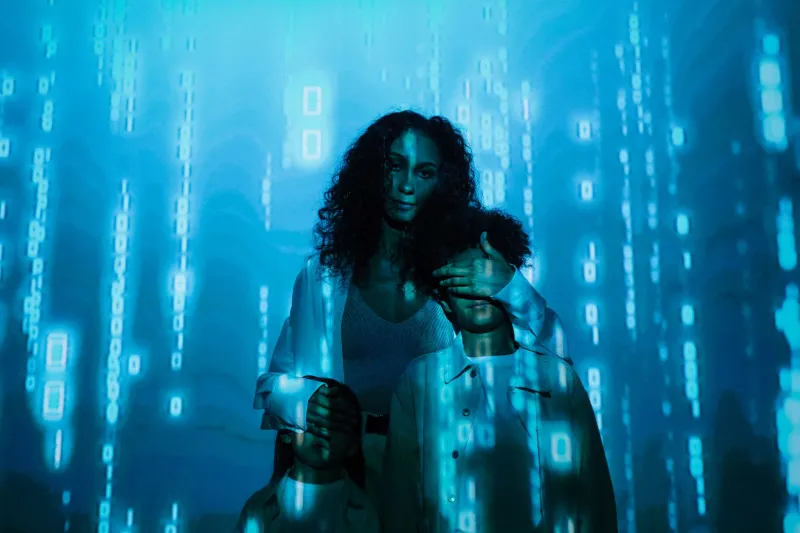
Imagine waking up to a DM from a fan asking about a video you never filmed. You click the link. It's you — or something close enough to you that most people wouldn't question it. Your face, your name in the title, someone else's body, and zero dollars in your pocket. Welcome to the deepfake economy, where your likeness is somebody else's product.
This isn't a hypothetical. It's Tuesday for a growing number of adult creators across the US.
The Scale of the Problem Nobody Wants to Own
Non-consensual deepfake pornography has exploded over the last three years. The tools got cheaper, the outputs got cleaner, and the distribution networks — largely anonymous forums, Telegram channels, and shady tube sites — got faster. Researchers at the AI tracking firm Sensity estimated that over 90% of all deepfake video content online is pornographic in nature, and the overwhelming majority of targets are women who never consented to appear in any of it.
For adult creators specifically, the damage hits different. These are people who have built brands around their actual bodies, their actual performances, their actual relationships with fans. When a convincing fake surfaces, it doesn't just violate them personally — it cannibalizes their business. Fans who find the bootleg version have no incentive to subscribe to the real thing. The impersonation undercuts the authentic product.
"I had a subscriber cancel on me and tell me he'd found 'free' content of me," one creator told us, asking to remain anonymous. "It wasn't me. But he didn't believe that. Why would he? It looked real enough."
The Law Is Playing Catch-Up — Badly
Here's where it gets frustrating. As of right now, there is no comprehensive federal law in the United States that specifically criminalizes non-consensual deepfake pornography. A handful of states — including California, Texas, Virginia, and Georgia — have passed legislation targeting it, but enforcement is inconsistent, penalties vary wildly, and identifying the actual perpetrators behind anonymous accounts is a logistical nightmare.
The DEFIANCE Act, signed into law in 2024, was a step forward — it created a federal civil cause of action for victims of non-consensual intimate imagery, including AI-generated content. But civil suits require you to find and identify the person who made the content, which is often impossible when the creator is operating through a VPN and posting on platforms based overseas.
Platform liability under Section 230 further complicates things. Many of the sites hosting this content hide behind the argument that they're just neutral conduits. Victims are left filing DMCA takedowns one video at a time, playing whack-a-mole against an operation that can regenerate content faster than any legal team can suppress it.
"The law was written for a different era," said one intellectual property attorney who works with adult industry clients. "It's like trying to stop a firehose with a Post-it note."
Creators Are Not Waiting for Washington
Rather than sitting around hoping Congress gets its act together, a lot of adult creators have started building their own defenses — and some of those defenses are genuinely clever.
One increasingly popular approach is content watermarking at the source. Creators are embedding invisible digital fingerprints into their original footage before it ever goes live. If that content gets scraped and used to train a deepfake model, the watermark can theoretically trace the origin. Companies like Imatag and Digimarc have been developing forensic watermarking tools that are starting to find traction in the adult space.
Another strategy is proactive presence flooding — essentially, making so much authentic, verified content available that the deepfake versions get drowned out in search results. It's not a perfect solution, but it's a real one. Creators who maintain strong SEO, consistent branding, and active engagement with verified fan communities create a baseline of trust that makes fakes harder to pass off.
Some creators have also turned to community intelligence. Their most loyal fans have become an informal early-warning system, flagging fake content the moment it surfaces. Discord servers, private subreddits, and fan forums are being used to circulate alerts and coordinate mass reporting campaigns against infringing content. It's grassroots, it's scrappy, and it actually works — sometimes faster than any formal DMCA process.
The Tech Arms Race
On the detection side, a few startups are building tools specifically designed to identify AI-generated faces in video content. Hive Moderation and Reality Defender are among the companies offering deepfake detection APIs that platforms can integrate into their upload pipelines. The problem is adoption — most of the sites actually hosting this content have zero incentive to implement detection tools that would gut their traffic.
There's also the question of generative model accountability. Some advocates are pushing for legislation that would require AI companies to maintain records of what content their models were trained on and to provide opt-out mechanisms for individuals who don't want their likeness used as training data. The Adult Performer Advocacy Committee (APAC) has been vocal about this, calling for explicit consent frameworks baked into AI development pipelines before the technology gets any further ahead of the law.
It's a reasonable ask. Whether it gets traction in a political environment still largely allergic to treating adult industry workers as a legitimate constituency is another question entirely.
Who's Actually Winning
A few creators have managed to turn these situations to their advantage — or at least neutralize the damage effectively. One performer we spoke with described how she responded to a wave of deepfakes by launching a verification campaign across all her platforms, leaning hard into the message that the real version of her is only available in one place. Her subscriber count went up.
"I made the fakes work for me," she said. "I told my fans: someone out there wants to be me badly enough to fake it. Doesn't that tell you something about what I've built?"
That's a power move, and it's not available to everyone. Newer creators with smaller audiences don't have the platform or the fanbase loyalty to pull it off. For them, a convincing deepfake can be genuinely career-ending before they've had a chance to build the kind of trust that makes fans skeptical of fakes in the first place.
The Bottom Line
The deepfake problem isn't going away. The technology is getting better, the barrier to entry is getting lower, and the regulatory framework is still catching up. Adult creators are on the front lines of a fight that will eventually affect anyone with a public digital presence — they just happen to be the most vulnerable and the least protected right now.
What's clear is that waiting for the law to save you is not a strategy. The creators coming out ahead are the ones building redundant defenses: legal, technical, and community-based. None of it is a complete fix. All of it matters.
Your face is yours. Keeping it that way is going to take more than a single lawsuit.